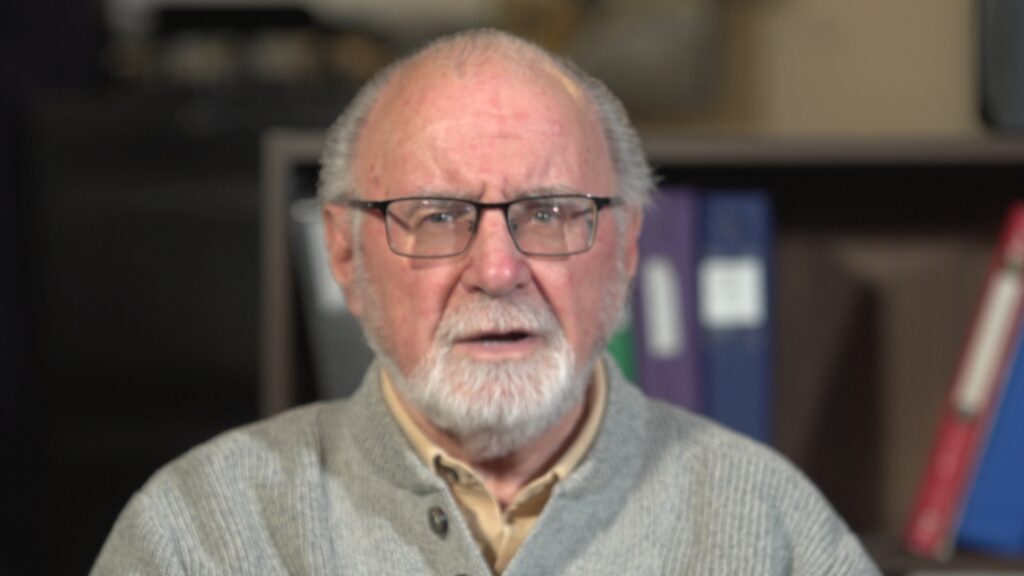
George Cuff was born in Jasper Place in the late 1940s, next to what was then Barrel Taxi; his parents soon bought a house at 9909 – 151 Street. He and his three siblings attended Central School until Grade 6, except for George, who took Grades 3 and 5 at Sherwood School. For Grade 9, he went to the newly opened Jasper Place Composite High School, and graduated from there in 1967. He is grateful for the teachers he had throughout his school years, “I think about the quality of the teachers and the fact that they had a vested interest in you as a kid.”
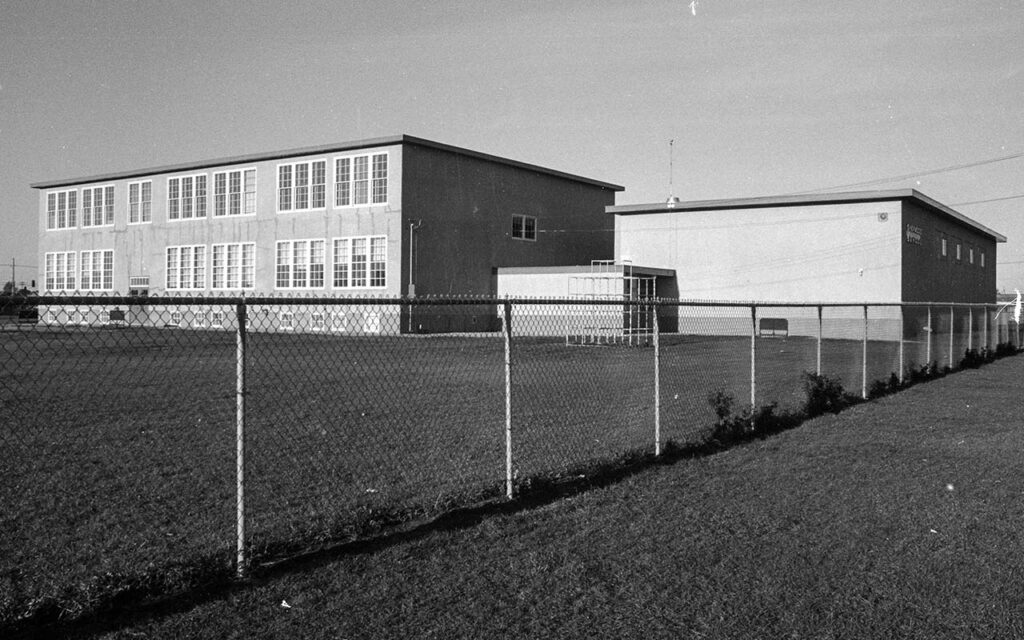
After graduation from JPCHP, Cuff worked in banking, and then decided to further his education at the University of Alberta, and then, “…took on the job as the second-ever director of Parks and Recreation in Spruce Grove. That was May of 1974, and three years later, I was the mayor for the next 12 years while I was working as a consultant. So that’s a quick snapshot. I’m still in Spruce Grove – same house, same family, same wife 45 years later.”
Cuff has continued as a consultant and writer on governance issues.
The Cuff and Krys families were neighbours, and the JPCHP interviewed George Cuff side-by-side with Wayne Krys [link to WK’s profile].
In this clip, George Cuff describes their house and yard and where they skated in the wintertime.
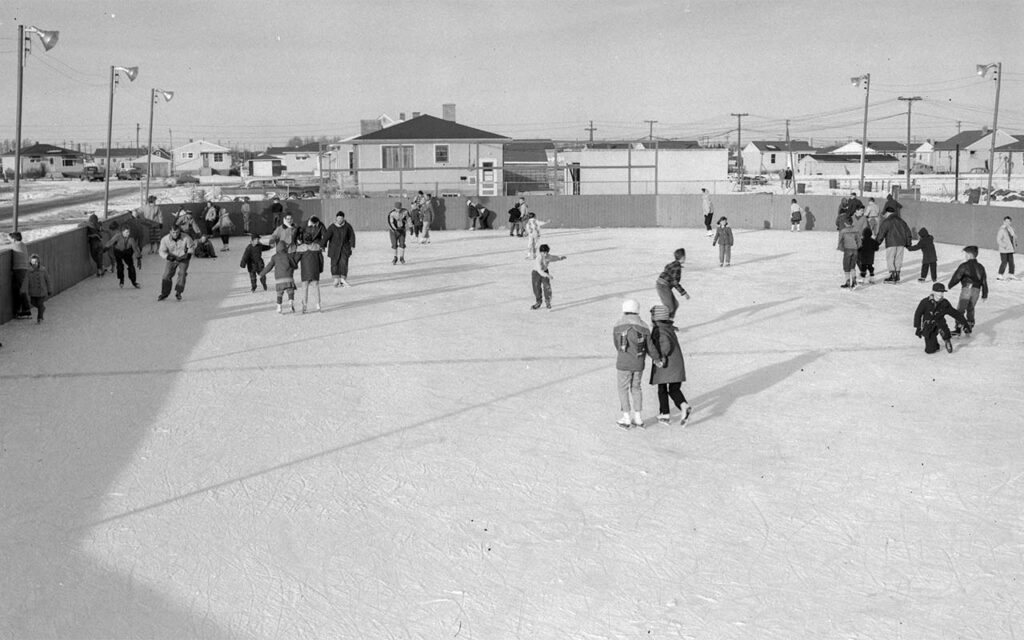
Cuff describes some of the colourful neighbours who lived around them, and where their parents worked and how they commuted. Talking about the areas they played in:
We played obviously in our yards. We played about two or three blocks to the east of us where there was an open field and we converted it into a football field, which was anything but. We played until it was too dark to see who had the ball. So we played there, we played in the schoolgrounds in terms of playing softball or whatever. I don’t recall that frequently, but we did play there. And we played in MacKinnon Ravine, because a) it was interesting and b) it was free. We would steal crab apples from Mr. Case’s yard at the foot of our street, and the reason I became a good runner is because I always had somebody behind me chasing us down the MacKinnon Ravine, which in those days had a stream going down it. We built little trails and we had a little shack; we built a platform on top of a couple of trees, and holes on the bank that we could hide in. It was an unbelievable playing area. We’d be like C.S. Lewis in Shadowlands where they built the Chronicles of Narnia around. It was similar for us; we had our Narnia story. It was right down in MacKinnon Ravine, which went all the way down to the river. We went swimming in the river. My brother and I, I remember one day we swam across, which was unbelievable and foolish because the current was a lot stronger than one would imagine. But we had a wonderful time playing, and I think it was just absolutely wholesome. We’d go up to the top of Hermit’s Hill on about 95th Avenue and [Riverside Drive] or something like that. And the riverbank, we’d go up to the top of the riverbank and across the street to these beautiful homes and get the water hose off the front of the house and we’d be drinking from the water hose. The neighbour would see us and wave at us, and it was all okay. But as Wayne said, it was a much different kind of neighbourhood, a much more trusting neighbourhood.
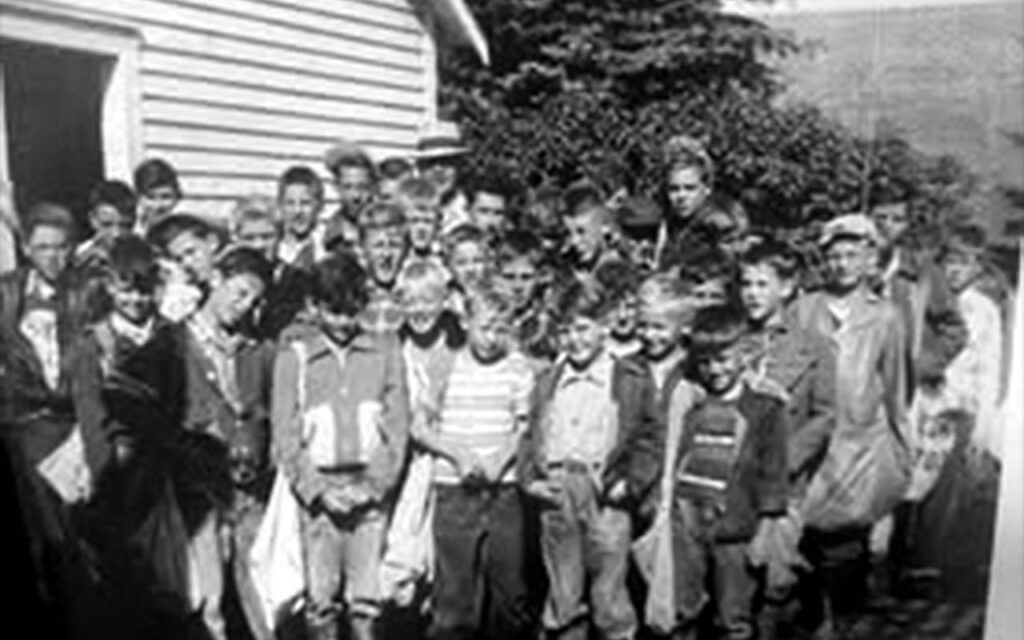
Both Cuff and Krys worked as “paper boys” for the Edmonton Journal out of the Jasper Place “paper shack” on Stony Plain Road a bit west of 148 Street. Cuff was initially the paper boy, Krys his helper, then Cuff took over management of the Jasper Place “paper shack”. It was a difficult job, he explains:
The routes were 70 papers to 140 probably; ours was about 92 papers or something. The papers were sizeable, I’ll tell you. You got curves in your shoulders from carrying the newspapers. [….] Or taking the papers off of the delivery truck that came to the shack on Saturday afternoon to drop off the papers, where all the boys were waiting. The kids were too small; I’d be out there putting them on my back and taking them into the shack. [….] It was no mean feat, I’ll tell you, to do that. You’d insert the papers downtown, as I recall; that was another Saturday morning. We’d go down Saturday morning, take in the boys’ money, count all the money; it was all change in those days. So you got good at rolling coins; before they had the rollers, you did the rolling by hand. Then when you finished that, you went into another part of The Edmonton Journal and you inserted the weekend magazine and comics into The Edmonton Journal.
While Wayne Krys joined Cubs and Scouts, George Cuff describes a completely different teenage experience involving street fighting, which he describes in this video clip, and associates it with the poverty of that area of Jasper Place. A boxing club run by Jerry Ramsey steered him away from a lot of that street fighting.
Other tales of street fighting and violence in Jasper Place are peppered throughout his interview, and include Cuff’s memorable encounter with a gun, a brawl at the A&W, motorcycle gangs and glue sniffing. He notes that the atmosphere changed around 1970: “We went from fighting to loving. The loving was preferable. I remember it was at Ross Sheppard grounds, I remember there was a big love-in there. I lost one of my girlfriends at the time.”
Cuff and Krys discuss the presence of Indigenous students who were bussed to schools in Jasper Place from residential schools in the area, and how skilled those students were as basketball players. The two friends attended some shows with the musical group, the Chieftones, a group of Indigenous students who went on to fame in the United States. They also mention that they played with the Lipscombe and the Brown children, two Black families who had migrated to Jasper Place from Amber Valley. Cuff and Krys feel that there was no discrimination or racism shown towards either the First Nations students or the Black families, mainly because, as George Cuff says, “…we were all poor, and poverty kept us all equal.”
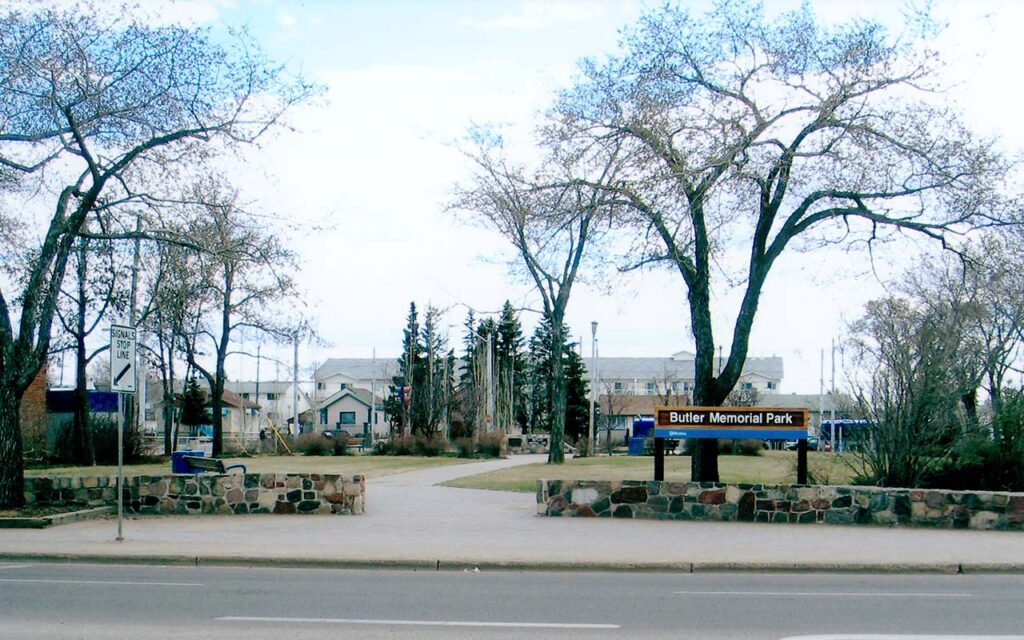
Cuff and Krys remember the names of a few famous people that came out of the Town of Jasper Place, noting that there were some, but not a lot of “legends”. “The biggest event,” Cuff says, “was the shooting [of Richard Butler],” the former fire chief, who was shot by a deranged man in August 1958; they discuss the event and the park named for him, which is next to the transit centre.
Because he looked older than his real age in high school, Cuff was able to get into bars and liquor stores, and tells, as he says, “a good story” about bootlegging for his mates. He was also an athlete and mentions how he trained for that and for boxing: “Past Jasper Place Composite High School, I used to run cross-country; you ran out the back door, there was nothing.”
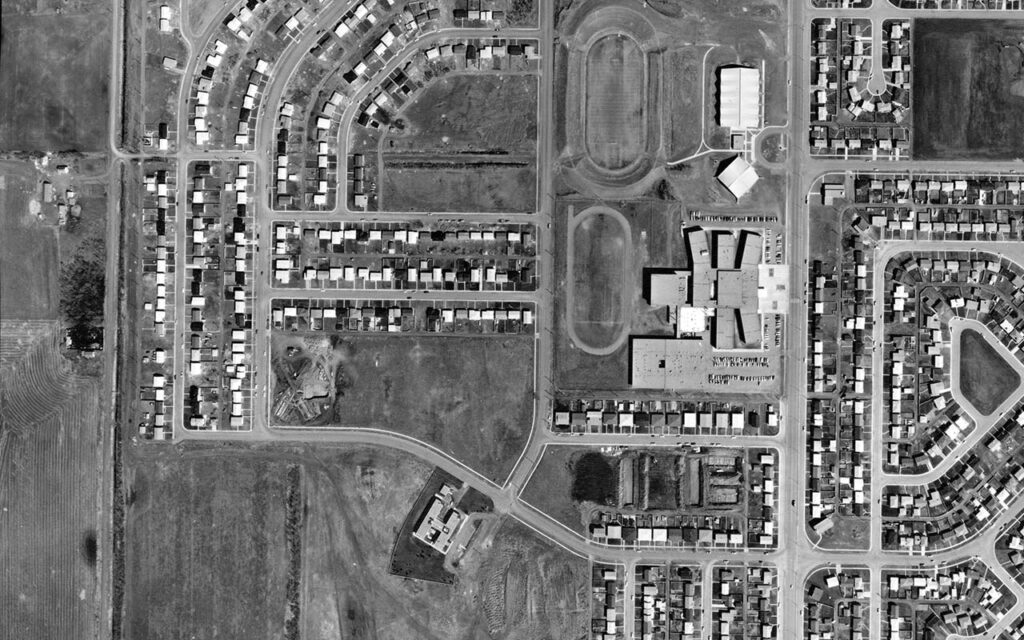
In this clip, Cuff talks about being at Jasper Place Composite High School and tells a story which involved a broken window, a plan to raise funds to replace the window, and a generous – and famous – donor.